Why I Don't Listen to Mainstream Music. Period.


Listen to the Blog Article Below:
I used to love music. Not in a passive, background-noise kind of way. I mean I was in it. I thought I was giving my feelings somewhere to go, letting the words carry what I couldn't say myself. That's what I believed was happening. The truth is, I was caught up in the melodies, the production, the tones. The actual lyrics? Most times I wasn't paying attention unless the hook hit hard enough to demand it.
That changed when I started looking back. When I reached back into music I had known as a child in the 70s, as a young teenager in Memphis in the 80s and 90s, I started seeing something I had missed. A pattern. And once I saw it, I couldn't unsee it.
The Pattern I Couldn't Ignore
Mainstream music is full of double entendres. Lyrics that carry one meaning on the surface and something else entirely underneath. And we are singing these songs at sports events, school functions, youth gatherings, places where children are present and engaged. The sexual undertones, the glorification of violence, the lust, the infidelity — all of it wrapped in something that sounds clean because the melody is nice.
The packaging is the point. When something sounds good, we lower our defenses. We stop analyzing. We accept it because it feels good going in.
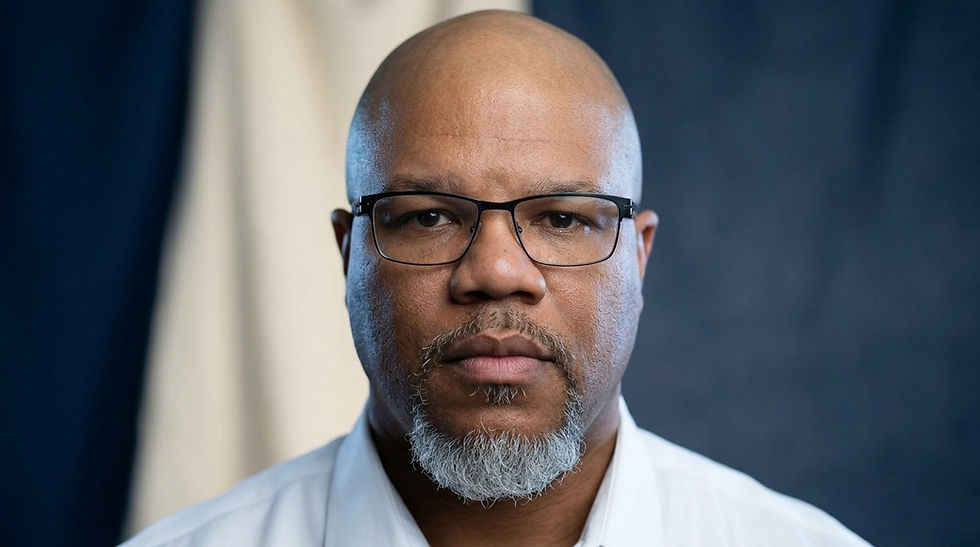
Music doesn't ask for your permission. It just enters. What you do with it after that is the only choice you actually get. Marcus "MD" Taylor
Memphis Taught Me What a Switch Looks Like
Growing up in Memphis, I listened to what was then called Triple Six Mafia — now Three 6 Mafia. They were local. They were doing mixtapes before anyone outside the city cared. The music was dark, but at the time, it felt like it fit. We were teenagers going through a phase where rebellion felt like identity.
What I noticed, though, was what happened when that music played in certain spaces. At the Crystal Palace skating rink out in Westwood, the night could be going fine. Fun, regular, everybody moving. Then the trap music came on, the hood anthems kicked in, and something shifted. People got hyped. Arguments started. Fights broke out. Shootings happened in parking lots. People did things outside that they wouldn't have done twenty minutes earlier inside.
The music was the switch.
Same thing at house parties, school functions. The R&B ballads came on and it became an excuse to cross physical boundaries with people who may not have welcomed that in any other context. Different music. Different behavior. Different decisions. The environment didn't change. Only the soundtrack did.
Gospel Isn't Exempt Either
Fast forward to the late nineties when gospel music started going mainstream. What I call gospel pop. And instead of clarity, it created confusion. Because what we were hearing on the radio didn't match what we had been taught in the church. Scriptures were being paraphrased loosely, reinterpreted for a wider audience, or used as decoration around messages that had little to do with what those scriptures actually said.
That tells its own story. It shows how willing we are to accept something when it's labeled correctly and delivered smoothly, even when the substance doesn't hold up. The genre doesn't protect you. The wrapper doesn't protect you. You have to be the one paying attention.
What I Do Instead
On long drives, I listen to audiobooks. When I need sound in the background, I choose instrumental music, classical compositions, things without lyrics. I recognize that even classical pieces carry histories and narratives behind them. Those stories exist. But they're not being pushed into my ears in plain language demanding an emotional response in real time.
If I use music with lyrics, it's music I've created or curated myself, tied to a specific purpose, an organization I'm part of, an environment I've intentionally built. I'm not an island about this. I've edited highlight videos for high school and middle school athletes where the selected music completely undercuts the goal of the video. You're trying to showcase a young person's ability and character, but the lyrics layered over that footage are communicating something incompatible with that message. We scroll past it because we're used to it. That's the problem.
What you allow into your ears, your eyes, your mind — that's not passive consumption. That's a decision. Most times we just don't treat it like one. — Marcus "MD" Taylor
This Isn't a Mandate. It's a Mirror.
I'm not telling anyone what they must do. This is not a prescription. This is my journal that I choose to share. If you read it and it resonates, carry it with you. If not, keep it moving. Either way, the door is open.
What I am saying is that we should be honest with ourselves about what we're taking in and what it's doing. When we defend certain content reflexively, when we argue for the right to consume things that work against what we say we stand for, we're not being free. We're being managed. By the content. By the algorithm. By whatever switch someone else designed for us.
This carries into everything — movies, books, politics, social media. The distractions aren't random. They keep us disconnected from individual and collective purpose. They keep us reactive. The goal, at least for me, is to stay connected to what actually matters. To choose what I allow into my mind with the same intentionality I try to bring to everything else.
That's why I don't listen to mainstream music when I drive, when I study, when I think.
Because the music is a switch. And I decided I get to choose when it flips.


Comments