I’m Not Broken: The Reality of Living With High-Functioning Bipolar Energy

Updated: Dec 18, 2025
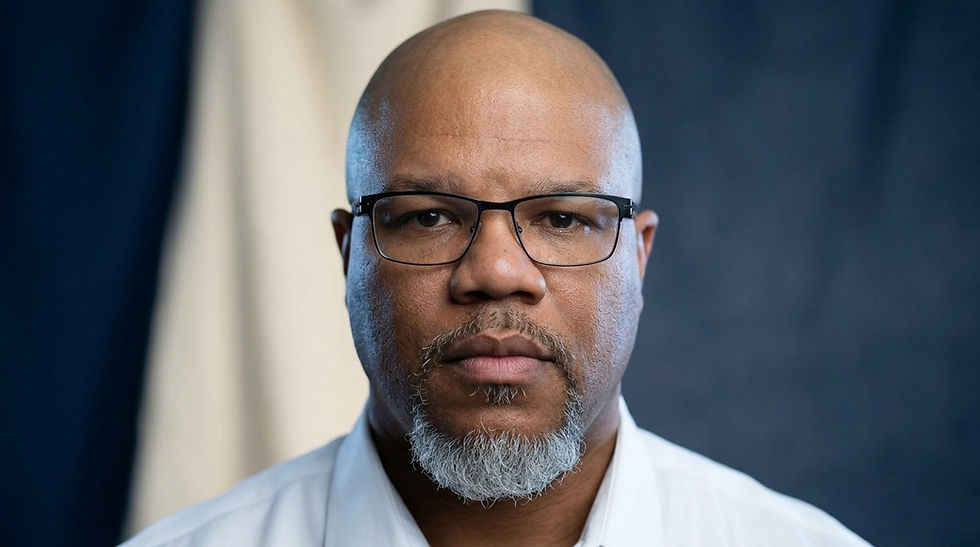
By Marcus “MD” Taylor
People hear the words bipolar disorder and imagine a one-size-fits-all picture: unstable, irrational, unpredictable, or emotionally chaotic. They picture someone who can’t hold responsibilities, who swings from extreme highs to devastating lows without warning, or who disrupts the lives of everyone around them.
Those stereotypes follow people like shadows. But they have almost nothing to do with my reality or the reality for many people who live with high-functioning bipolar.
For me, this condition isn’t about losing control. It’s about carrying an internal engine capable of running fast, running long, and running hard in pursuit of purpose, responsibility, and service. My mind doesn’t idle. My heart invests deeply. My drive comes from intention, not instability.
I am not broken.
I am not fragile.
I am not dangerous.
I am human with a complex wiring that deserves understanding, not judgment.
This article isn’t about teaching.
It isn’t about defending.
It's about awareness.
Because awareness allows dignity.
And dignity allows understanding.
What Mania Actually Feels Like for Me
When people hear “mania,” they assume chaos, recklessness, or emotional explosions. But my high-functioning mania is nothing like that.
For me, mania feels like this:
A rush of energy and ideas
A powerful sense of urgency
Heightened clarity
Creativity is firing at full speed
A deep desire to execute
A pace that feels natural, not dangerous
It is the engine of my productivity, leadership, and creativity. It’s not a mistake.
It’s not a malfunction.
It’s my mind running with purpose.
This is why the most unhelpful thing anyone can say to me in that mode is:
“Calm down.”
“You’re doing too much.”
“Slow down before you burn out.”
To someone who doesn’t move at my pace, I might appear intense. But to me, it feels normal. I’ve operated like this my entire life. My pace is not a cry for help; it is the way I’ve learned to turn ideas into results, leadership into impact, and responsibility into action.
When people project their limits onto my pace, it feels judgmental, even if unintentional. It feels like an attempt to shrink my capacity down to their comfort zone.
Projection hurts more than my symptoms ever could.
An Anecdote: The Day Success and Silence Collided
A few months ago, I had one of the most productive seasons of my life. I launched major projects at work, completed another manuscript, made progress in my PhD program, and watched ideas turn into tangible outcomes. From the outside, it looked like momentum and excellence.
But inside, something else was happening.
One evening, after all the accomplishments had settled, I felt that heaviness, the subtle but unmistakable signal that a depressive phase was approaching. It arrives quietly after I’ve poured everything into everything.
It wasn’t sadness.
It wasn’t a collapse.
It was the emotional weight of realizing I had given to everyone and everything… while receiving silence in return.
For months, people I considered close hadn’t returned calls, hadn’t answered texts, hadn’t checked in at all.
That realization broke something in me.
Because here’s a truth people rarely speak aloud:
When you are strong, people assume you are always strong.
When you are dependable, people assume you never need support.
When you give, people assume you have more to give.
And when you carry others, they assume you never need to be carried.
I thought about the countless times I had answered my phone to support others — listening to their pain, their problems, their grief — and offering whatever help I could.
Then I looked at the silence on my end.
And I cracked.
I sent a message to my family:
“If anyone cares, send a text. I feel like nobody cares about me.”
It wasn’t anger.
It wasn’t manipulation.
It was a rare moment when the strongest person finally broke.
Most responded with love and concern. A few took offense as if my emotional break was an attack on them. They made it about themselves instead of seeing the pain I was expressing.
That part still stings. But I know they love and care for me, its just that their expressions may have been overloaded at the time.
It taught me something painful:
Even when you give your best to everyone, not everyone has the capacity or the willingness to give anything back. They maybe also going through something as well.
Awareness is painful.
But it is also freeing.
Another Lived Moment: When My Mind Locked in a Room Full of Scholars
There was another moment, one that revealed how deeply my past and present sometimes collide.
I was at the university in a room full of intelligent, accomplished peers. We were discussing artificial intelligence, instructional design, and learning theory. These were topics I knew well. I wasn’t just participating, I was contributing meaningfully.
Then I said one sentence… and everything shifted.
A heaviness settled on me, but not the usual depressive heaviness. This one carried:
inadequacy
shame
confusion
self-doubt
Suddenly, I felt like an outsider in a room I had earned the right to be in.
My mind whispered:
“You don’t belong here.”
“You’re not as smart as them.”
“You’re just a soldier.”
“You’re a failure from the inner city.”
“You’re an imposter.”
Even though I knew the content, referenced the research, and lived the work, my confidence collapsed.
Sweat formed.
My heart raced.
My thoughts scrambled.
I excused myself, stared into a mirror, and silently asked:
“What is happening? Why do I feel like this?”
It wasn’t simple imposter syndrome.
It was trauma.
It was a mood disorder.
It was an identity conflict.
It was years of being punished for emotions in the military, clashing with the vulnerability required in higher education.
It was old voices returning at the worst possible moment.
But this time, something different happened.
I went to my director and told her what I was feeling. Instead of dismissing it or disciplining it like the military once did, she said:
“Let me move my meeting. Sit down. Let’s talk.”
She didn’t fix me.
She listened.
She asked questions.
She gave me time.
She treated me like a human being — not a malfunctioning one.
That moment changed something in me.
It showed me what authentic leadership looks like:
not control,
not correction,
but compassion and curiosity.
Few people know how to hold someone’s truth without mishandling it.
She did.
And I’ll always be grateful.
The Weight of Depression in a High-Functioning Mind
Depression for me doesn’t start with sadness.
It begins with emotional heaviness, often after seasons of intense achievement.
It is disappointing.
Not in others.
In myself.
I expect reciprocity that never comes.
I expect understanding that is rarely offered.
I expect support that people assume I don’t need.
And suddenly, an emotional vacuum forms, leaving room for insecurity, sorrow, and exhaustion to creep in.
People try to cheer me up.
They try to diagnose me.
They try to apply their coping skills to my experiences.
But that doesn’t work.
What I need is simple:
silence
space
reflection
recalibration
That’s how I heal.
The Myth of Fixing People Like Me
Most people think they can fix me.
They can’t.
Because:
Only I understand the internal measurements of my energy.
Only I feel the shift before it happens.
Only I know the signals my mind gives me.
People interpret what they see, not what is actually happening.
Trying to fix me is not support.
Trying to control me is not caring.
Trying to speak for me is not understanding.
High-functioning bipolar disorder is misunderstood because:
My highs look productive
My lows look private
My middle looks normal
So people assume, and assumptions create more harm than the condition itself.
My Respect and Frustration With Mental Health Initiatives
I want to say something clearly:
I both respect and dislike many mental health initiatives, especially those focused on men.
I respect them because they are needed.
Men suffer in silence.
Men carry burdens they never name.
Men fie emotionally long before their bodies fail them.
So awareness matters deeply.
But I dislike the way mental health is often presented:
One PowerPoint.
One workshop.
One awareness month.
One trending topic.
Mental health is not a trend.
It is not a campaign
It is not a checkbox.
It is daily work.
Daily struggle.
Daily victories.
Daily questions that many men are afraid to ask.
I mentor young men, middle-aged men, and older men. I mentor boys who are still finding themselves and men who are still trying to rebuild themselves. And what I see is simple:
Prevention is easy to talk about.
Recovery is manageable to discuss.
But in the middle of the actual emotional storm is where men need help most.
Yet that’s precisely where society goes quiet.
Mood disorders, bipolar, depression, imposter syndrome, and trauma need targeted conversations. Specific language. Cultural awareness. Safe spaces.
Women’s mental health receives more compassion and structured support, and that is good. But men’s mental health is often flattened into slogans, quick tips, or silence.
That frustrates me.
Because men don’t get healthier through campaigns.
They get healthier through consistent understanding with people who actually show up when things get real.
Mental health is not a moment.
It is a lifestyle of awareness.
And society, especially men’s spaces, needs to treat it that way.
A Spiritual Truth Many Forget
Scripture is full of emotionally layered men:
David praised and wept.
Elijah performed miracles and collapsed in despair.
Job questioned everything.
God accepted their emotional depth.
He met them in it.
Strength and struggle coexist.
Purpose and pressure often walk side by side.
Emotional complexity is not a disqualification; it is humanity in complete form.
My wiring doesn’t lessen my leadership.
It deepens it.
What I Want People to Understand
I am not unstable.
I am not delicate.
I am not someone who needs constant monitoring.
I am a man with:
intense focus
deep emotional layers
strong responsibility
and the capacity to function at high levels despite internal challenges
My moods do not define me.
My character does.
My discipline does.
My purpose does.
And the greatest gift anyone can offer me is not advice but understanding.
Understanding that my pace is not reckless.
Understanding that my depression is not a weakness.
Understanding that my withdrawal is not rejection.
Understanding that my honesty is not instability.
Understanding that I am human with a rhythm different from others, but no less valid.
If You Take Nothing Else From This Article, Take This
I am not broken.
I am not flawed.
I am not dangerous.
I am a high-functioning man who carries heavy moods, deep purpose, and a powerful internal engine.
People like me are not asking to be fixed.
We are asking to be understood.
Seen.
Respected.
And allowed to move at the speed we were designed to move.
That is not mental illness.
That is humanity with complexity.
And complexity should be honored, not feared.


Comments