Read, Think, Speak: An Invitation to Rigorous Dialogue


Listen to the Blog Article Below:
A conversation about mistaking experience for wisdom, and why genuine impact is built through critical thinking rather than ego.
I had a conversation recently with someone who read an article I wrote about organizational models and connection (Association, Membership, and Bonding: Three Models of Connection (And Why We Confuse Them)). He had not liked it. More specifically, he had reacted to it emotionally before reading it completely. His response was rooted in anecdotal reasoning and personal opinions about how things should be. I respected his perspective deeply. I also saw an opportunity.
I did not attempt to forcibly change his mind. Instead, I invited him into a more rigorous conversation. I asked him to read more carefully. I asked him to examine where his reactions were coming from. I asked him to distinguish between his personal experience and broader patterns. I asked him to think.
That conversation became a lesson in something much larger: how we can mistake our own experiences for universal truths, how we can confuse the positions we have held with the impact we have made, and how ego can masquerade as wisdom. But more importantly, it became a model for the kind of dialogue we need among men in organizations—candid, curious, grounded in critical thinking rather than defensiveness.
When Personal Experience Becomes Universal Truth
I explained to him that many of the statements he was making were important primarily to him. The examples I had presented in the article were not about him personally. Yet he was interpreting them through the lens of his own experiences. In doing so, he was turning his individual experiences into universal truths. I asked him a simple question: "Can you see the difference?"
This is a pattern worth examining together, not in judgment but in genuine inquiry. When someone has been deeply involved in an organization, held meaningful positions, and invested years of their life in something, they develop a vested interest in how that organization is perceived and understood. That investment is real. It is also completely human. The question is not whether this happens—it does for all of us—but whether we can recognize it happening and move beyond it.
He had taken examples that described general patterns and concluded that they were criticisms of his specific choices. I could have simply corrected him. Instead, I tried to help him see how the interpretation happened. "Notice what you did there," I said. "You took something that was not about you and made it about you. Can you see how that works?"
This is the invitation behind critical thinking. Not "you are wrong," but "let's examine this together." Not "your reasoning is flawed," but "let's trace through your logic and see where we land." The goal is not to prove anyone wrong. The goal is to understand more clearly.
Experience can provide insight. But it does not grant authority to impose one's conclusions on everyone else simply because one has "been around" or held certain roles. And recognizing this is not weakness. It is maturity.
I shared with him something I have come to understand over years of working in organizations: his experiences are real and meaningful. They are genuinely valuable. But they are his. They belong to his journey through an organization, not to the organization's larger story. His path is not the template for all paths. And when we can make that distinction, we actually become more valuable to the organizations we serve, because we can see them more clearly.
This is the kind of conversation I want to encourage among men in our communities and organizations. Not conversations where someone tries to convince you that you are wrong. But conversations where we examine together, where we ask questions, where we distinguish between our story and the larger story.
The Three Models: Understanding the Difference
Before exploring the conversation further, it is worth defining what I meant by the three models of connection. These are distinct concepts, yet I watch people move between them without recognizing the shift.
Association
Association is the most basic form of connection. You are associated with an organization. You attend events. You are on a roster. You participate in activities. But there is no deep structural relationship. You could leave tomorrow and the organization would function the same way. Association is transactional. It requires minimal commitment and creates minimal obligation. Many people mistake association for membership. They believe that showing up means they belong in the deepest sense. It does not.
Membership
Membership is something deeper. You are part of the organization's structure. You have responsibilities. You have rights. Your name is tied to the organization in a formal way. You understand the organization's rules and you abide by them. Membership requires you to sometimes subordinate your personal preferences to the organization's needs. It creates mutual obligation. But membership is still primarily about your participation in the organization's current state. It is about what you do now, not about building for what comes next.
Bonding
Bonding is the deepest form of connection. This is when you are genuinely invested in the organization's future. You are building systems, creating culture, mentoring others, making decisions that will outlast your tenure. You care about the organization when you are not in it anymore. You make sacrifices not for recognition but for continuity. You strengthen the institution itself, not just your role within it. Bonding creates what lasts. Most people never move beyond membership. Many mistake association for bonding.
The man I was speaking with had held positions of influence. He had been around for a long time. In his mind, this meant he had bonded with the organization. But what I was observing was someone who had occupied significant membership roles while remaining at the association level in terms of actual institutional investment. He had held titles. He had not built lasting systems that functioned independently of him.
Recognizing Our Own Thinking Patterns
As the conversation progressed, I began to notice something I wanted to help him see. Many of his arguments relied on patterns of thinking that, when examined carefully, did not quite hold up. I was not trying to catch him in a mistake. I was trying to help him become aware of how his own mind works—something we all need.
Understanding our own thinking patterns is one of the most valuable skills we can develop. It allows us to make better arguments, to understand ourselves more deeply, and to engage with others more authentically. So I named some of the patterns I was observing.
Anecdotal reasoning is one pattern we all fall into. He would cite a single experience and treat it as proof of a universal principle. "When I led this initiative, it worked this way, therefore this is how it should be done." His experience was real. The conclusion he drew from it was not automatically valid. One success story does not create a model for universal application. But we all do this. We take our wins and assume they are recipes. Learning to notice when we are doing it is the first step toward thinking more rigorously.
Appeal to authority through tenure is another one. He would say that because he had been involved for a long time, his perspective carried more weight than others'. I understand why this is tempting. Time invested feels like it should equal authority. But it does not always work that way. Someone can spend thirty years learning the wrong lessons. Someone can spend five years learning the right ones. What matters is not how long you have been there, but what you have learned while you were there. Learning this distinction changes how we listen to each other.
Moving the goalposts happens when we feel challenged. When I would push back on one point, he would shift to a different argument. This is something I do too, and I appreciate when people help me see it. It is not dishonest. It is just a reflex. But noticing it helps us engage more authentically.
The point of naming these patterns was not to shame him. It was to help him become aware of them. Because once you are aware of how your own thinking works, you can choose differently. You can say, "I notice I am doing that thing. Let me think about this more carefully." That is growth.
I wanted to help him see something that took me years to understand: questioning your thinking is not weakness. It is honesty. And honesty with yourself is the foundation for being genuinely honest with others.
"I am not trying to win this conversation," I told him. "I am trying to think clearly about it. And I want to invite you to do the same. Can we both just ask ourselves: what is actually true here?"
The Question That Matters Most
I closed the conversation with a question, not as a challenge but as an invitation to reflection. The kind of question that sits with you, that makes you think differently about what you are doing.
"Eventually, you and I will both be gone. When that time comes, what will your impact actually be? What will your legacy be outside of your own personal experiences? Did you truly make a difference, or will people simply tell stories about the things you once did?"
This question is not meant as an accusation. It is meant as an invitation. An invitation to think about what we are actually building. What we are actually contributing. Whether we are focused on being important in the moment or on making something that matters after we are gone.
I have watched this pattern many times. Someone holds a position of influence or notoriety. At the time, that role feels monumental. The person carrying the title feels central to the organization's functioning. It is a real feeling. It is also instructive to sit with what happens when the role ends.
Maybe they step down. Maybe they move on. Maybe circumstances change. And something remarkable happens: the organization continues without them. The systems they set in place either work well enough to function independently, or they collapse and someone else builds new ones. The title that felt so important becomes part of the past.
This is not a criticism of anyone. This is simply how institutions work. No one person is irreplaceable. The question is not whether you will be replaced. The question is what you leave behind that makes the replacing easier, smoother, better.
The Lens Problem: When Experience Becomes a Comfort and a Limitation
Many people enter organizations without fully understanding their long-term purpose or expectations. They navigate them through personal instinct and the feedback they receive. Over time, the way they experienced the organization becomes familiar. It becomes home. There is nothing wrong with that. But it can also become a filter through which everything else is judged.
I understand this deeply. There is comfort in how things were. There is identity in the role you played. There is belonging in the era you were part of. Letting go of that means acknowledging that you are not the center of the story anymore. That is difficult. For all of us.
But organizations change. They have to. New generations come in. New challenges emerge. New solutions are tried. And the people who were deeply involved in an earlier era have a choice: they can hold tightly to how things were, or they can stay curious about how things are becoming.
I watched this happen. The man I was speaking with had held his roles during a specific era. That era shaped him. It gave him skills and understanding he still carries. It gave him stories that matter. But it was an era. And eras end. The organization has changed. It has grown in some ways and adapted in others. But in his mind, his era was the standard against which all other eras must be measured.
He could not see that the organization was stronger now in some ways than it had been during his tenure. He could not engage with why certain changes had been made. He could only interpret them through the lens of nostalgia and conclude that something had been lost.
The question is not whether we hold our experiences dear. The question is whether we can hold them dear while remaining genuinely open to what comes next.
The tragedy is that his experiences could have been a resource. He could have said, "Here is what I learned during my time. Here is what worked. Here is what I would caution against." That would have been genuine wisdom being offered. Instead, the experiences became a defense, a way of saying "things were better when I was involved," which is something different entirely.
I think what I want to invite men in our organizations to consider is this: Can you honor your experiences without being imprisoned by them? Can you be proud of what you built without insisting that everything built after must be measured against what you built? Can you offer what you have learned without requiring that others follow your blueprint?
That is the kind of wisdom that actually helps organizations. And it is available to all of us if we are willing to think critically about our own relationships to our past.
Experience vs. Wisdom: The Crucial Distinction
This is where we arrive at the heart of the matter. Experience and wisdom are not the same thing. They are sometimes connected, but they are not identical.
Experience is what happens to you. You participate in events. You hold positions. You witness moments. You accumulate memories. But experience is passive in some sense. Things happen and you are there for them.
Wisdom is what you extract from experience. It is the ability to take what happened and understand why it happened. To see patterns. To recognize what was specific to that moment and what applies more broadly. To know which lessons are universal and which are contextual. To accept that the world changes and your old answers might not fit new questions.
Many people confuse the two. They believe that simply having been somewhere for a long time grants them wisdom about that place. It does not. It grants them experience. What they do with that experience determines whether wisdom emerges.
I have known people who were present for major historical moments in their organizations and learned nothing from them except nostalgia. I have known people who were in the background for a short time and extracted lessons that shaped decades of good work.
The difference was not the experience. It was the reflection. It was the willingness to examine what happened, to ask why, to acknowledge limitation, to remain humble about what they understood and what they did not.
What Legacy Actually Looks Like
I want to be very clear about what I mean by legacy, because this is where the conversation ultimately landed.
Legacy is not found in the positions you once held. It is not found in the titles you carried. It is not found in the stories people tell about the things you did while you were prominent. Those things fade. They become history. And eventually, only those who were there can even relate to them.
True legacy is found in the institutions and people that are stronger because you were there. It is found in systems you built that function without you. It is found in people you mentored who are now mentoring others. It is found in problems you solved that stay solved. It is found in cultures you shaped that persist even after you have gone.
Real legacy outlasts your tenure. Real legacy does not require you to still be present to maintain it. Real legacy is what happens when the institution grows beyond your influence and you are genuinely glad it did.
I think of people I have known who held significant roles and then stepped away. Some of them disappeared and their roles had to be entirely rebuilt from scratch. The institution had not bonded with them. It had merely associated with them. They were members, but they had not built anything that transcended their membership.
But I also know people who stepped away and the organization they left behind was stronger, more capable, more sustainable. Those people had bonded. They had invested in the institution's future, not just their own position within it. They had built systems. They had developed people. They had created culture. When they left, those things remained.
The difference was not how long they served. It was what they served toward.
The Uncomfortable Truth About Being Replaced
There is something that happens to people when they hold positions of influence and then lose them. Suddenly, their centrality is revealed to be an illusion. The organization that could not possibly function without them functions perfectly well. Decisions are made without their input. Problems are solved they were not consulted on. The institution moves forward and they are not part of the narrative anymore.
This is deeply difficult for people who built their identity around their role. Because it reveals something they may not have wanted to know: they were not as essential as they thought.
The appropriate response to this is humility. To ask what you actually built that matters. To look at the institution and ask if it is stronger now than when you left. To resist the temptation to judge the present by the standard of the past.
But many people instead choose defensiveness. They hold onto their stories. They emphasize how important their time was. They judge the people who came after them. They insist that things were better before. They are, in essence, trying to prove their irreplaceability by denying the evidence that they have been replaced.
I watched the man I was speaking with do this. He could not simply say, "I did my best during my time and now it is someone else's turn." He had to insist that his time was the standard. He had to defend his choices as if the organization's future depended on vindicating his past.
But his defensiveness was actually a kind of loss of faith. If he truly believed in the institution, he would be content to have contributed to it and then let it evolve beyond his influence.
What It Means to Engage Authentically
I want to return to why I engaged in this conversation so directly. It was not to humiliate or to win. It was because I respected him enough to take his ideas seriously—seriously enough to examine them.
There is a kind of shallow respect that simply accepts what someone says and moves on. "That is your perspective," we say, and we disengage. That is not respect. That is indifference. It is saying "your thoughts do not matter enough for me to engage with them."
Real respect means something different. It means saying "I think you are capable of understanding this more clearly, and I want to engage with you in that direction." It means taking someone seriously enough to push back, to ask questions, to say "let's examine this together."
When I pointed out the thinking patterns I was observing, I was not being disrespectful. I was taking his intelligence seriously. I was assuming he was thoughtful enough to recognize patterns when they were named. I was treating his ideas as worthy of genuine examination rather than simply worthy of acceptance.
Unfortunately, he experienced the engagement as attack. I understand why. We have been conditioned in many ways to experience disagreement as rejection, to interpret questions as challenges to our worth, to believe that being asked to think differently is the same as being told we are wrong.
But that conditioning is worth examining. Because real growth requires people who care enough to invite us to think more rigorously. It requires friends and mentors who say, "I respect you enough to have this conversation with you. Let's think together."
This is what I want to encourage among men in our organizations. Not easy agreement. But genuine dialogue. Not "I will believe you because you are in a position to speak," but "let's examine this together and see where the clarity actually lies."
What We Owe the Institutions We Leave Behind
Here is the responsibility that comes with positions of influence: you will eventually vacate them. When you do, the institution will continue. Your responsibility is to leave it stronger.
This means building things that do not depend on your presence. It means mentoring people who will be better than you. It means creating systems that function without you. It means being willing to make decisions that benefit the organization even if they diminish your own importance within it.
It means, ultimately, caring more about the institution than about your story about the institution.
The people who do this well do not spend time after they leave defending their tenure. They are too busy watching the organization grow. They are pleased when new leaders accomplish things they never could have. They offer wisdom when asked but do not try to govern the present from the past.
They understand that true legacy is not about them. It is about what they made possible after they were gone.
Closing: An Invitation to Read, Think, and Speak with Understanding
Eventually, he and I will both be gone. When that happens, the organizations we belong to will continue. People will remember some stories about the roles we held. But the real question is not what they will remember. The real question is whether the organizations will be stronger because we were there.
That question cannot be answered by defending your past. It can only be answered by the future proving you right—by institutions that function better, by leaders who were mentored and are now mentoring others, by cultures that persist and deepen over time.
What I want to invite men in our communities and organizations to do is to think about this question. Not in a way that creates shame about the past, but in a way that clarifies the present.
Read more. Not just things that confirm what you already believe, but things that challenge you. Things that ask you to think differently. When you read something that bothers you, do not immediately dismiss it. Ask yourself: "What is bothering me? Is it that the substance is wrong, or is it that my experience is different?" Those are two different things.
Think critically. That means examining your own thinking first. It means noticing the patterns—anecdotal reasoning, appeal to authority, moving the goalposts—that we all fall into. It means being honest about what you actually know versus what you believe. It means being willing to revise your thinking when presented with compelling evidence or clearer reasoning.
Speak with understanding. When you disagree with someone, do not immediately assume they are wrong or that they are attacking you. Ask questions. Seek to understand their perspective fully. Then, if you genuinely disagree, express that disagreement not as a judgment but as an invitation to further dialogue.
This kind of conversation is rarer than it should be. In organizations, in communities, among men who care about something larger than themselves. But it is possible. And when it happens, it changes things. It builds understanding. It creates space for genuine growth. It models something that younger men see and learn to do.
That is the kind of legacy that actually matters. Not that you held a position. But that you helped people think more clearly. That you invited them into genuine dialogue. That you modeled critical thinking and intellectual humility. That you cared more about understanding than about being right.
The conversation I had was not about winning. It was about the possibility of two people thinking together instead of defending separately. That possibility is always there. It just requires someone willing to initiate it, and someone willing to accept the invitation.
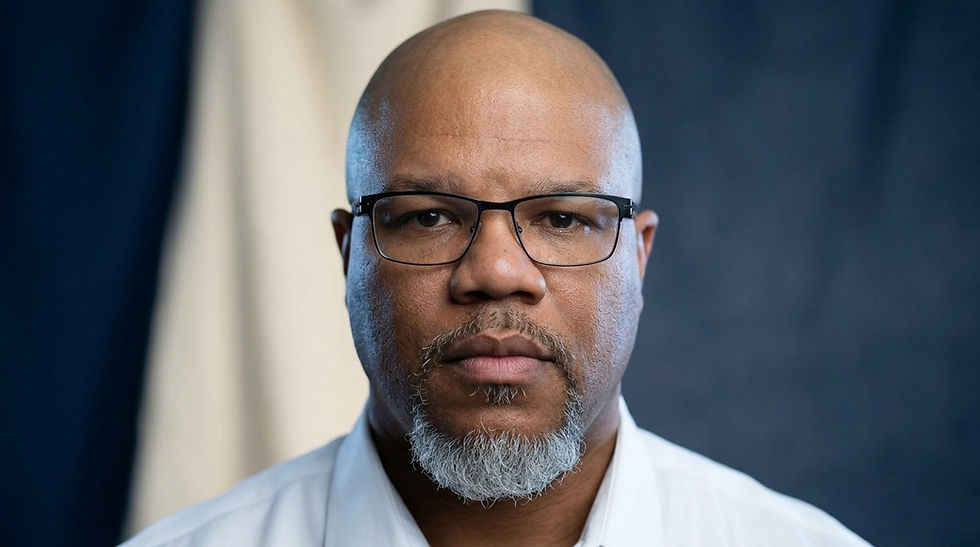
Marcus D. Taylor is a Campus AI Strategist, instructional innovation leader, and vice polemarch of his fraternal organization. He is interested in how institutions build culture, develop leaders, and create lasting impact beyond individual tenure.


Comments